
The 3rd Gen of Vision: Why SmartSight is Overtaking LASIK
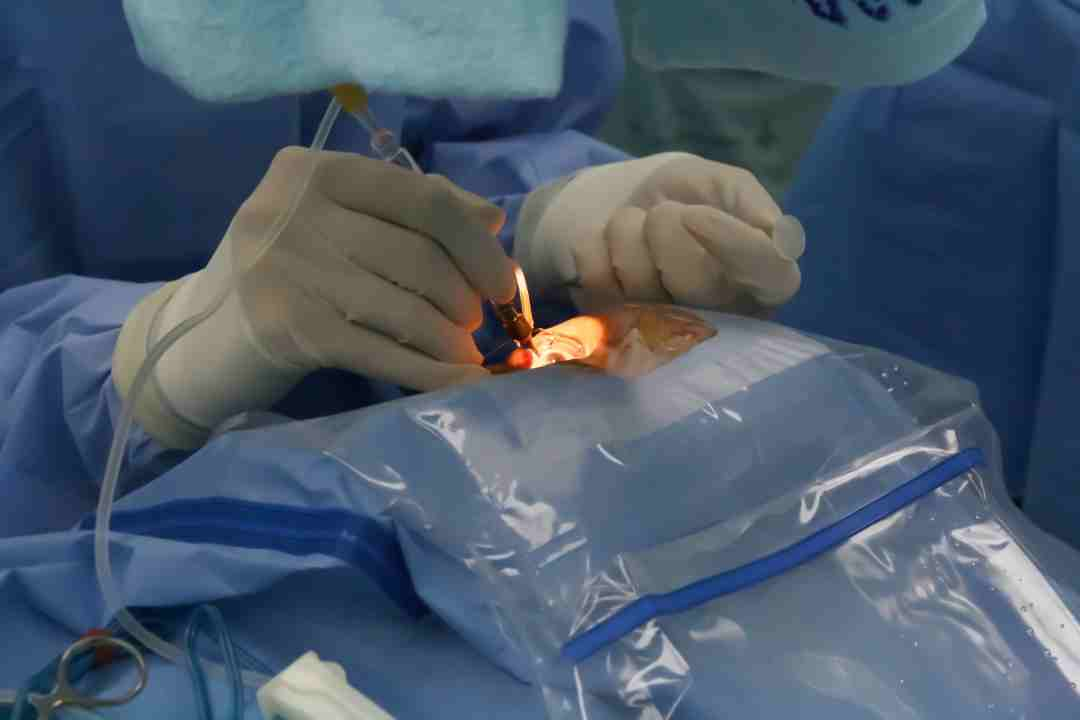
The landscape of Australian ophthalmology is shifting. For decades, LASIK was the gold standard for those seeking freedom from glasses and contact lenses. However, a new era has arrived. The 3rd Gen of Vision: Why SmartSight is overtaking traditional LASIK is not just a catchy headline; it represents a fundamental leap in laser eye surgery technology that prioritizes corneal integrity and patient comfort. For Australians researching vision correction, the choice often comes down to proven results versus modern innovation. SmartSight, the latest advancement in lenticule extraction, addresses the inherent limitations of 1st-generation (PRK) and 2nd-generation (LASIK) procedures, offering a flapless, minimally invasive alternative that is rapidly becoming the preferred choice in leading clinics across Sydney, Melbourne, and Brisbane. See more: Is It Time? Signs You Might Need Cataract Surgery Sooner Than You Think What is SmartSight? Defining the 3rd Generation of Laser Eye Surgery To understand why SmartSight is gaining such momentum, we must first look at the evolution of vision correction. 1st Generation (PRK/ASA): Surface ablation where the outer layer of the cornea is removed. Effective, but involves a long, painful recovery. 2nd Generation (LASIK): A circular flap is cut into the cornea to allow a laser to reshape the tissue underneath. Faster recovery than PRK, but the flap remains a permanent vulnerability. 3rd Generation (SmartSight/Lenticule Extraction): A precise, keyhole procedure where a microscopic disc of tissue (a lenticule) is created inside the cornea and removed through a tiny incision. No flap is created. SmartSight utilizes advanced femtosecond laser technology (specifically the Schwind Atos system) to perform this "keyhole" surgery. It represents the pinnacle of refractive precision, combining the safety of PRK with the rapid recovery of LASIK, without the "flap" complications associated with the latter. How SmartSight Works: The Science of Lenticule Extraction The technical superiority of SmartSight lies in its "tissue-saving" approach. Unlike LASIK, which requires a $20\text{mm}$ circumferential incision to create a flap, SmartSight uses a tiny incision of less than $3\text{mm}$. The Step-by-Step SmartSight Process Sophisticated Mapping: The Schwind Atos laser performs high-speed eye tracking and compensates for cyclotorsion (the natural rotation of the eye when lying down), ensuring the laser is perfectly centered. Lenticule Creation: The laser pulses create a thin, lens-shaped piece of tissue (the lenticule) within the stroma, the middle layer of the cornea. Keyhole Removal: The surgeon gently removes this lenticule through a microscopic incision. Reshaping: Once the lenticule is removed, the cornea's shape is altered, correcting the refractive error (myopia or astigmatism) and allowing light to focus perfectly on the retina. Why SmartSight is Overtaking Traditional LASIK in Australia There are several clinical and lifestyle reasons why Australian patients are increasingly opting for the 3rd Gen of Vision. 1. Superior Corneal Stability Because SmartSight does not involve cutting a flap, the upper layers of the cornea remain largely untouched. This preserves the biomechanical strength of the eye. For athletes, police officers, or those in contact sports, the risk of "flap displacement"—a rare but serious LASIK complication—is entirely eliminated. 2. Reduced…